I. Changes in the Landscape of the Traditional Printing Industry
Over the past two decades, the printing industry’s core competitiveness has long depended on the scale of its equipment and production capacity. However, with the deep penetration of the Internet and the e-commerce ecosystem, the extensive, high-volume model—which relies solely on “large volume and broad reach”—is no longer sustainable. Currently, China’s printing industry is transitioning fromInformation Reproducer向High-Value Manufacturing IntegratorTransformation. For comprehensive printing companies with deep roots in their regions, understanding this shift in the underlying logic is far more important than focusing on short-term fluctuations in print volume.
1. Demand Side: From Bulk Orders to “Multiple Small Batches”
The rapid growth of e-commerce and the fragmentation of brand marketing have directly led to a disruptive shift in order structures. The high-volume, long-term, stable orders of the past are now being replaced by high-frequency, small-batch orders rich in personalized elements. This trend requires printing companies to move beyond simply being production facilities that take orders and manufacture products; instead, they must possessFlexible Manufacturing与Quick Responseability.
2. Supply Side: Deep Integration of Equipment and Technology
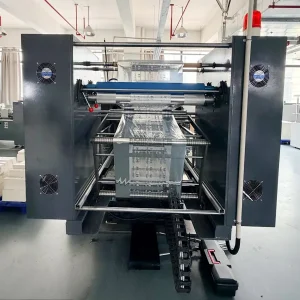
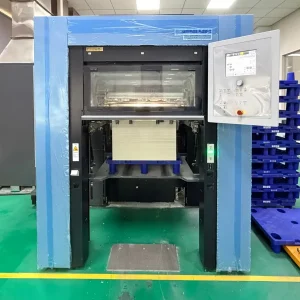
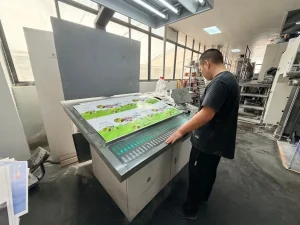
In the face of market changes, a single production line is no longer sufficient to meet complex order demands. Take Jiaxing Yufeng Printing as an example; the company is equipped withHeidelberg Color Offset Press与Digital Quick-Print MachineThis creates a perfect synergy of complementary strengths. Offset presses handle high-volume, high-quality commercial brochures, books, and magazines, ensuring color saturation and printing efficiency; digital press machines, on the other hand, specialize in rush orders and variable data printing, enabling print runs starting at just one copy and on-demand customization. ThisHybrid Printing SolutionsIt has become the industry standard.
II. Green and Smart: The Two Core Competitive Advantages of Printing Plants
1. Green printing has become a prerequisite for market entry
Under the goal of carbon neutrality, environmental protection has gone from being optional to mandatory. PossessingGreen Printing CertificationSuch companies enjoy a natural reputation for trustworthiness when taking on orders from government agencies, businesses, and brand retailers. This is evident not only in their use of eco-friendly inks but also in their comprehensive quality control throughout the entire process—from proofreading to random inspections of finished products. Adhering to eco-friendly materials and strictly controlling cutting precision and binding quality are the cornerstones for ensuring that every batch of products consistently meets standards.
2. Smart Manufacturing Enhances Overall Efficiency
Digital transformation is not simply about replacing human workers with machines; rather, it involves using ERP and MES systems to break down data silos across design, plate making, printing, and post-press binding. For companies that haveEnd-to-End Supporting EquipmentFor factories that perform processes such as automatic lamination, hot stamping, die-cutting, box gluing, and thread-sewn binding, implementing predictive maintenance and real-time production scheduling can significantly reduce downtime caused by material shortages and ensure a seamless transition from creative design to packaging and distribution.
III. The Long-Term Value of Deeply Cultivating Local Services
For the regional economy, local, full-service printing facilities offer irreplaceable service advantages. Unlike outsourcing to distant locations, local one-stop service meansOn-site CoordinationMore convenient,Same-City DeliveryGreater efficiency and smoother post-sales communication. By offering value-added services such as free design and layout, customization based on client-provided materials, and volume discounts, printing companies can forge deep partnerships with small and medium-sized enterprises, chain brands, and government agencies, becoming trusted, long-term suppliers for their clients. In the future, continuously upgrading smart equipment and optimizing specialized production techniques will be key for printing companies to weather market cycles and achieve high-quality development.
 简体中文
简体中文  English
  Русский